Our Behaviour Curriculum
At Leominster CE School we develop excellent standards of behaviour through our ‘Leominster Way’ curriculum. This curriculum carefully defines the behaviours and habits that we expect pupils to demonstrate, and is underpinned by our three core values, Be Respectful, Be Responsible, Be Resilient
We want to our pupils to learn to progress into adults who are polite, respectful, grateful and who succeed putting others before themselves. We believe that as pupils practise these behaviours, over time they become automatic routines that positively shape how they feel about themselves and how other people perceive them.
Our School values. Our rules that we live by:
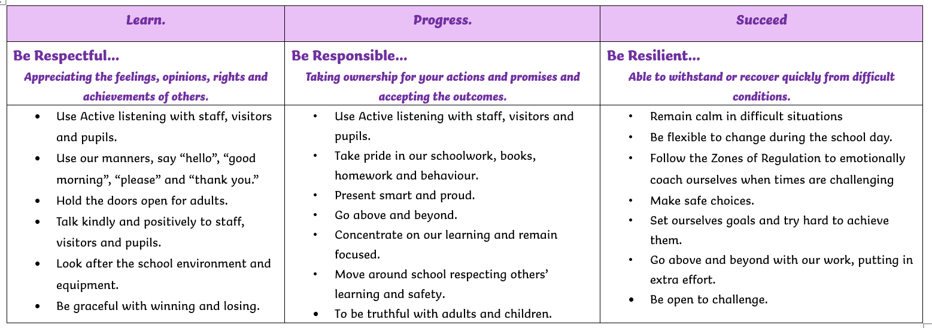
We triangulate and teach these values through regular assemblies for all:
We use Zones of Regulation across the school to support regulation and emotion coaching.
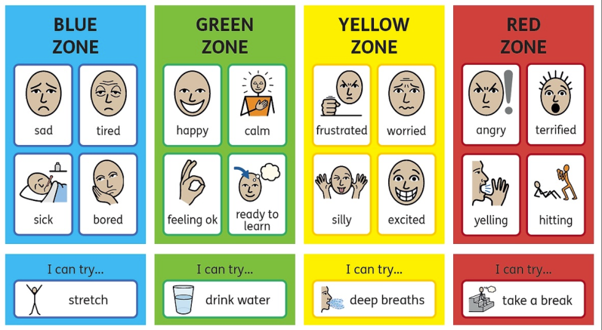
The Zones of Regulation is an internationally renowned intervention which helps children to manage difficult emotions, known as ‘self-regulation’.
Self-regulation is best described as the best state of alertness for a situation. For example, when your child takes part in a sports game, they would need to have a higher state of alertness than when, for example, they were working in a library.
From time to time, all of us (including adults) find it hard to manage strong feelings such as worry, anger, restlessness, fear or tiredness, and this stops us from getting on with our day effectively. Children who feel these emotions often find it hard to learn and concentrate in school. The Zones of Regulation aims to teach children strategies to help them cope with these feelings so they can get back to feeling calm and ready to learn. These coping strategies are called ‘self-regulation’.
We are using the Zones of Regulation throughout the school. We want to teach all our children good coping and regulation strategies so they can help themselves when they experience difficult situations in and out of school. Teaching them how to cope with these feelings might improve their ability to tackle learning challenges and build better resilience so they don’t give up so easily.
Teaching the children at a young age about managing their feelings will support them in later life and enable them to choose positive coping strategies to boost mental and physical wellbeing. The children will learn that everyone experiences all the Zones at one time or another and that no Zone is bad.
We aim to help children to:
- Recognise which Zone they are in and learn how to change or stay in the Zone they are in.
- Increase their emotional vocabulary so they can explain how they are feeling.
- Recognise when other people are in different Zones, thus developing better empathy.
- Develop an insight into what might make them move into the different Zones.
- Understand that emotions, sensory experiences such as lack of sleep or hunger and their environment might influence which Zone they are in.
- Develop problem-solving skills and resilience
- Identify a range of calming and alerting strategies that support them, a ‘toolkit’.
What are The Zones of Regulation? -Official Video-